Kitten Care
The First Months, Planned Out

Before pickup day
The new kitten checklist covers the shopping and setup: litter box and litter (choosing both), food, bowls, carrier (non-negotiable from day one: the loose-cat-in-car plan fails at the first vet visit), scratching post, kitten-proofing (string, thread, and hair ties are surgical emergencies: why, small amounts of lily can cause fatal kidney injury, cords get chewed), and the vet appointment booked for week one.
The first days and weeks
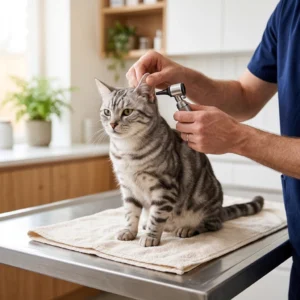
8-week-old kitten care walks the daily rhythm: the one-room start (a whole house overwhelms a kitten: territory grows in stages), sleep (kittens sleep 18–20 hours, same as puppies), play in short bursts (hands are never toys: the rule that prevents adult play-biting), and gentle handling practice that pays for a decade of vet visits and nail trims.
Feeding and health
- Kitten feeding schedule: meal counts by age, kitten-formula requirements (why growth food matters), and the no-cow's-milk rule (the myth)
- Kitten vaccination schedule: the FVRCP core series every 3–4 weeks until 16+ weeks, rabies per law, FeLV for kittens per the 2020 AAHA/AAFP Feline Vaccination Guidelines, and the same maternal-antibody logic as the puppy version
Spay/neuter typically lands around 5–6 months (before the first heat changes the math): plan it at the vaccine visits.
Litter training
How to litter train a kitten: the honest headline: most kittens arrive 90% trained by instinct and their mother. Your 10% is logistics: the right box (low entry, kitten-sized, in a quiet reachable spot), unscented fine litter, showing them the box after meals and naps, and never punishing accidents (the same rule as dogs, for the same reason). Accidents in a previously reliable kitten are a health or setup flag, not defiance.
Frequently asked questions
How old should a kitten be when you bring it home?
Minimum 8 weeks (many states regulate this), but 12–14 weeks is better: the extra litter time builds bite inhibition, confidence, and cat social skills you can't teach later. A too-early kitten is a harder kitten.
What do I need for a new kitten?
Litter box and litter, kitten food, bowls, a carrier, a scratching post, toys, and a safe starter room, plus a vet appointment in week one. The full checklist has the reasoning and the skip-list.
When can kittens leave their mother?
Physically at 8 weeks; behaviorally, 12+ weeks is the better standard: weaning completes around 8 weeks, but social learning from mother and littermates continues well past it. Ethical breeders and rescues hold to this.
Are kittens hard to litter train?
No: instinct does most of it. Provide a low-entry box in a quiet spot with unscented litter, place the kitten there after meals and naps, and never punish accidents. Persistent accidents are a setup or health question, not a training failure.
Pet Tools
Free tools for pet owners
Free calculators built for real decisions, not guesswork.
Cat Age Calculator
Find out how old your cat is in human years with the standard feline model.
Try toolCat Food Calculator
Work out the right daily food portion for your cat's weight and activity.
Try toolPet Cost Calculator
See what a dog or cat will realistically cost you per year, in dollars or euros.
Try toolCat Breed Selector
Find which cat breeds suit your home, routine, and family.
Try tool