Cat Gear That Cats Actually Use
The buying guides
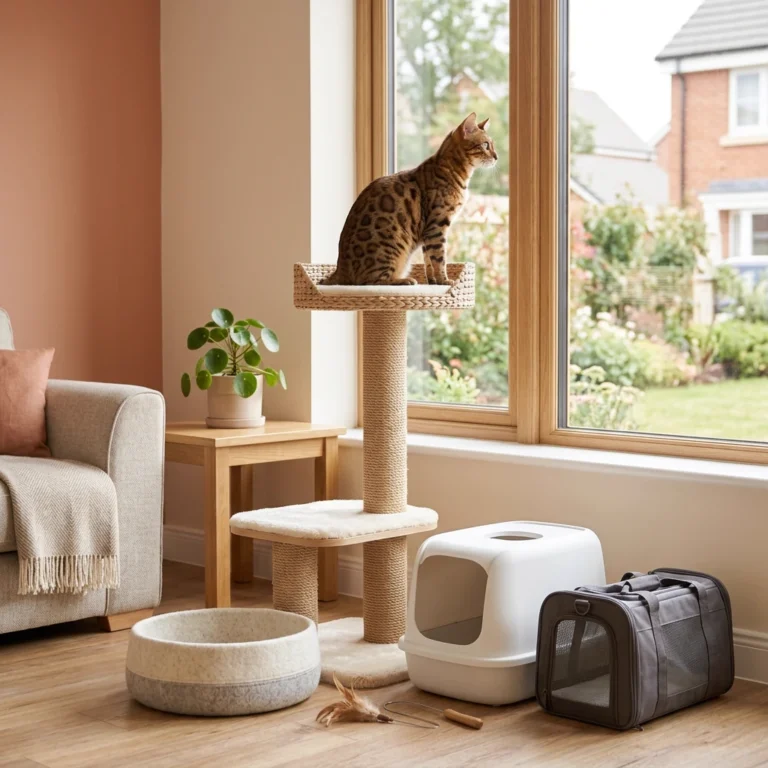
ThePawManual publishes five cat buying guides, covering litter, litter boxes, cat trees, toys, and carriers, each built from feline behavioral requirements rather than marketing appeal.
| Guide | Start here if… |
|---|---|
| Best cat litter | Odor, tracking, or a cat that's gone on strike |
| Best litter boxes | Setting up right, or fixing box avoidance |
| Best cat trees | Scratched furniture, bored cat, or multi-cat tension |
| Best cat toys | The night zoomies, or a cat that "doesn't play" |
| Best cat carriers | Vet-visit wrestling matches, or travel plans (travel guide) |
The four rules of buying for cats
Buying gear that a cat will actually use comes down to four rules: correct litter box math, tree stability over luxury, toys built for hunting instinct, and treating the carrier as medical equipment your cat needs to trust.
- The litter box rules are math, not features: one box per cat plus one, each 1.5× the cat's length, most cats prefer uncovered and unscented: the litter box guide explains why the automatic $500 robot doesn't fix what placement and count do.
- Stability beats luxury. A cat tree that wobbles once is dead to the cat forever: base weight and height matter, carpet color doesn't. Vertical territory is a behavioral need (and the scratching-post answer to furniture damage), not decor.
- Toys are hunting simulators, or they're clutter. Cats play predation: wand toys that move like prey, sessions that end in a "kill" and a meal: the toy guide sorts instinct-matched from landfill. A cat that "doesn't play" has usually just been offered the wrong prey.
- The carrier is medical equipment. A cat that only sees the carrier at vet time learns to vanish at the sight of it: the carrier guide covers the leave-it-out-always strategy and the top-loading feature that saves every future vet visit (vet-visit stress is a health barrier, not a quirk).
What cat products should I avoid?
Skip four things: laser pointers as the only toy (hunt with no catch = frustration: end sessions with a physical toy), scented litter (marketed at humans, vetoed by cat noses), covered boxes as odor "solutions" (they concentrate odor at cat level; scooping daily is the odor solution), and anything requiring the cat to be retrained to suit the product. The product adapts to the cat; that's the whole genre.
Frequently asked questions
How many litter boxes do I need?
One per cat, plus one: a two-cat home needs three, on different floors or in different zones. Box count and placement fix more litter problems than any premium product.
Are expensive automatic litter boxes worth it?
They solve scooping-avoidance, not cat problems: some cats fear the mechanism, and daily scooping is also your health monitoring window. Fix count, size, and placement first; automate only for an already-happy cat.
Why won't my cat use the cat tree?
Usually wobble (one bad experience blacklists it), wrong location (cats want sightlines and social proximity, not the garage), or wrong surface. Anchor it, move it to where you actually live, and reward exploration.
What's the best toy for a cat that won't play?
A wand toy moved like actual prey (scurrying, hiding behind things, freezing) in short dawn/dusk sessions ending with a catch and a meal. Most "won't play" cats are refusing the toy's choreography, not the game.
Pet Tools
Free tools for pet owners
Free calculators built for real decisions, not guesswork.
Cat Age Calculator
Find out how old your cat is in human years with the standard feline model.
Try toolCat Food Calculator
Work out the right daily food portion for your cat's weight and activity.
Try toolPet Cost Calculator
See what a dog or cat will realistically cost you per year, in dollars or euros.
Try toolCat Breed Selector
Find which cat breeds suit your home, routine, and family.
Try tool